DevOps & Infrastructure Automation Services
Transform your development lifecycle with professional DevOps and infrastructure automation services. At Synergi Tech, we partner with businesses across the UK to streamline software delivery, automate infrastructure management, and accelerate time-to-market whilst reducing costs and improving reliability.
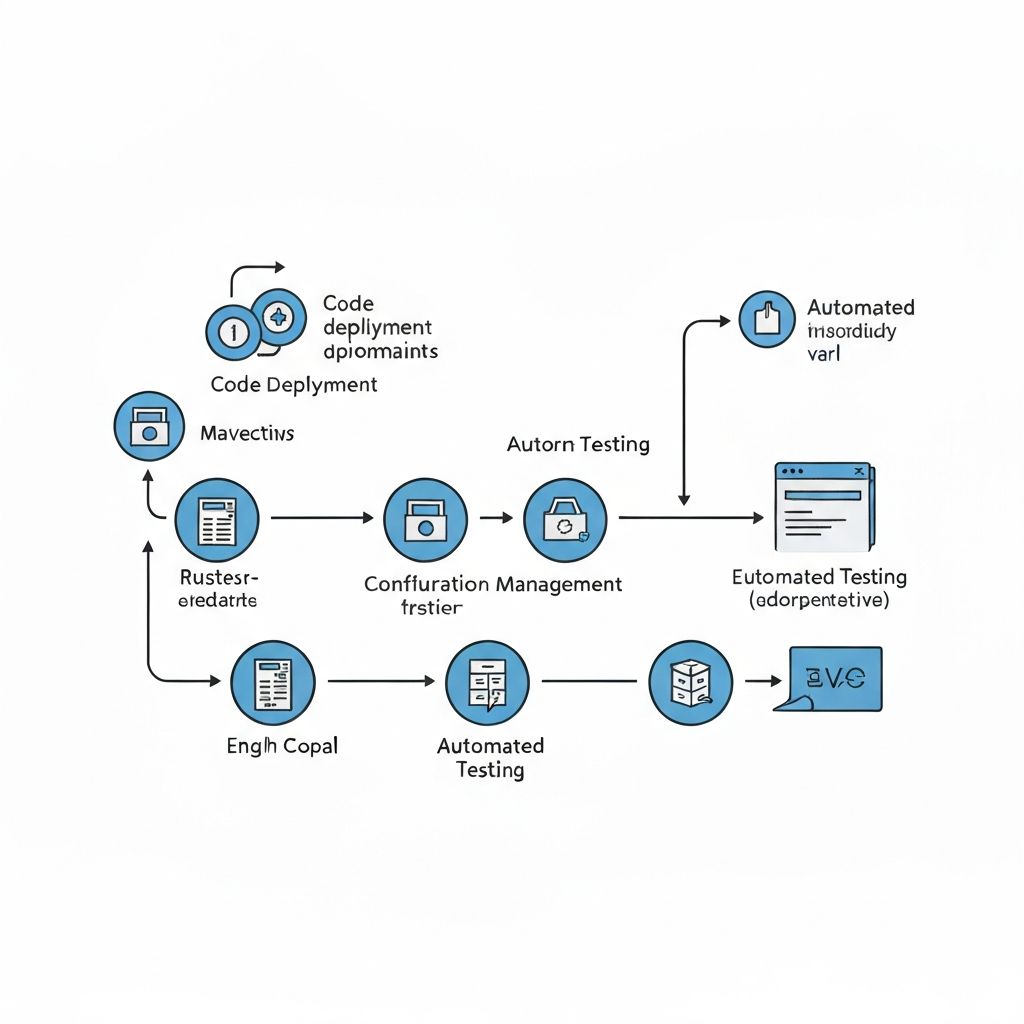
What Are DevOps Services?
DevOps is a set of practices that combines software development (Dev) and IT operations (Ops) to shorten the development lifecycle and deliver high-quality software continuously. DevOps services encompass the tools, processes, and cultural practices that enable organisations to automate infrastructure management, streamline deployments, and maintain reliable, scalable systems.
At Synergi Tech, we don't just implement DevOps tools – we become your long-term technology partner. Our comprehensive DevOps services help UK businesses achieve faster release cycles, improved collaboration between teams, reduced deployment failures, and lower infrastructure costs. Whether you're migrating to the cloud, modernising legacy systems, or building new applications, our DevOps expertise ensures your infrastructure supports your business objectives.
Infrastructure automation is at the heart of modern DevOps practices. By treating infrastructure as code, we enable your organisation to provision, configure, and manage servers, networks, and cloud resources through version-controlled templates rather than manual processes. This approach eliminates configuration drift, enables rapid scaling, and ensures consistency across development, testing, and production environments.
Our DevOps Solutions
Comprehensive DevOps and automation services designed to accelerate your development lifecycle and improve operational efficiency.
Automated continuous integration and deployment pipelines that streamline your software delivery process, reduce manual errors, and enable rapid, reliable releases.
- Automated build processes
- Automated testing integration
- Deployment automation
- Release orchestration
Manage and provision infrastructure through code using industry-standard tools like Terraform, Ansible, and CloudFormation for consistent, repeatable deployments.
- Terraform implementations
- Configuration management
- Version-controlled infrastructure
- Environment parity
Implement containerisation strategies using Docker and orchestration platforms like Kubernetes for scalable, portable, and efficient application deployment.
- Docker containerisation
- Kubernetes management
- Container security
- Auto-scaling configuration
Integrate security practices into your DevOps pipeline with automated security scanning, compliance checks, and policy enforcement throughout the development lifecycle.
- Automated security scanning
- Vulnerability assessments
- Compliance monitoring
- Policy as code
Comprehensive monitoring solutions that provide deep visibility into your applications and infrastructure, enabling proactive issue resolution and performance optimisation.
- Application performance monitoring
- Infrastructure monitoring
- Log aggregation & analysis
- Alerting & incident response
Implement robust version control strategies and collaboration workflows that enhance team productivity and code quality across your development organisation.
- Git workflow strategies
- Code review processes
- Branch management
- Collaboration tools integration
Our DevOps Implementation Process
A structured approach to DevOps transformation that ensures smooth adoption and measurable results.
We analyse your current development processes, infrastructure, and organisational culture to create a tailored DevOps strategy aligned with your business objectives.
We select and configure the optimal DevOps toolchain for your needs, including CI/CD platforms, infrastructure automation tools, and monitoring solutions.
We build automated pipelines, implement infrastructure as code, and establish monitoring systems that streamline your entire software delivery lifecycle.
We provide comprehensive training for your teams and continuously optimise your DevOps practices to improve efficiency, reliability, and performance over time.
Benefits of DevOps Automation
Discover how DevOps practices and infrastructure automation can transform your software delivery and operational efficiency.
Automated pipelines and streamlined processes enable you to release features and updates faster, giving you a competitive advantage and allowing you to respond quickly to market demands.
Automated testing, consistent deployments, and infrastructure as code reduce human error and improve system reliability, resulting in fewer failures and faster recovery times.
Automation eliminates manual tasks, optimises resource utilisation, and reduces deployment failures, significantly lowering operational costs whilst improving efficiency.
DevOps practices break down silos between development and operations teams, fostering better communication, shared responsibility, and collaborative problem-solving.
Infrastructure as code and containerisation enable you to scale resources dynamically, adapt to changing demands, and maintain consistent environments across development stages.
Automated security scanning, compliance checks, and policy enforcement integrated into your pipeline ensure security is maintained throughout the development lifecycle.
Industry Applications
DevOps services tailored for various industries and business requirements.
Accelerate your software delivery with automated pipelines, continuous integration, and robust testing frameworks. We help software companies reduce release cycles from weeks to hours whilst maintaining high quality standards.
Key Benefits: Faster releases, improved code quality, automated testing, efficient collaboration
Implement secure, compliant DevOps practices that meet stringent regulatory requirements. Our solutions ensure audit trails, automated compliance checks, and secure deployment processes for financial institutions.
Key Benefits: Regulatory compliance, security automation, audit trails, risk reduction
Enable rapid feature deployment and seamless scaling for e-commerce platforms. Our DevOps solutions help online retailers handle traffic spikes, deploy updates without downtime, and maintain optimal performance.
Key Benefits: Zero-downtime deployments, auto-scaling, performance optimisation, rapid updates
Transform legacy systems and modernise enterprise infrastructure with cloud-native DevOps practices. We help large organisations improve agility, reduce costs, and enhance collaboration across multiple teams and departments.
Key Benefits: Legacy modernisation, cross-team collaboration, cost reduction, improved agility
Technologies We Work With
Industry-leading DevOps tools and platforms tailored to your requirements.
- • Jenkins
- • GitLab CI/CD
- • GitHub Actions
- • Azure DevOps
- • CircleCI
- • Terraform
- • Ansible
- • CloudFormation
- • Pulumi
- • Chef
- • Docker
- • Kubernetes
- • Amazon ECS
- • Azure Container Instances
- • Helm
- • Prometheus
- • Grafana
- • ELK Stack
- • Datadog
- • New Relic
Why Choose Synergi Tech for DevOps?
We don't just implement tools and walk away. At Synergi Tech, we become your long-term technology partner, working closely with your teams to ensure DevOps practices are successfully adopted and continuously optimised. Our ongoing support and collaboration help you adapt to changing requirements and maximise your return on investment.
Our team of certified DevOps engineers and cloud architects brings extensive experience across diverse industries and technologies. We understand UK business requirements, regulatory frameworks, and industry standards, ensuring our solutions meet your specific needs and compliance obligations.
Our structured DevOps implementation methodology has helped numerous UK businesses achieve measurable improvements in deployment frequency, lead time, and system reliability. We tailor our approach to your organisation's maturity level and business objectives, ensuring smooth adoption and sustainable results.
We're not tied to specific vendors or platforms. Our technology-agnostic approach means we select the best tools and solutions for your unique requirements, whether you're using AWS, Azure, Google Cloud, or hybrid environments. This ensures you get optimal results without vendor lock-in.
From initial assessment through implementation and beyond, we provide comprehensive support at every stage. Our team offers training, documentation, knowledge transfer, and ongoing optimisation services to ensure your DevOps practices continue to deliver value long after the initial implementation.
Frequently Asked Questions
Traditional IT operations typically involve separate development and operations teams working in silos, with manual processes and infrequent releases. DevOps breaks down these barriers by fostering collaboration, automating repetitive tasks, and enabling continuous integration and deployment. This results in faster releases, improved quality, and better alignment between development and operations. DevOps also emphasises infrastructure as code, automated testing, and continuous monitoring to improve efficiency and reliability.
DevOps implementation timelines vary based on your current infrastructure, team size, and objectives. A basic CI/CD pipeline can be implemented in 4-6 weeks, whilst a comprehensive DevOps transformation including infrastructure automation, containerisation, and monitoring typically takes 3-6 months. However, DevOps is an ongoing journey rather than a one-time project. We work with you to establish quick wins early on whilst building towards long-term objectives through phased implementation.
Not necessarily. DevOps is primarily about practices and culture rather than specific tools. We assess your existing toolchain and identify opportunities to improve automation and integration. In many cases, we can leverage your current tools whilst introducing new solutions where gaps exist. Our technology-agnostic approach ensures we recommend tools based on your specific requirements rather than forcing wholesale replacement of working systems.
Organisations typically see 20-30% reduction in operational costs through automation, improved resource utilisation, and reduced deployment failures. Infrastructure as code eliminates manual configuration errors, whilst automated scaling optimises cloud spending. Additionally, faster deployment cycles and reduced downtime translate to improved revenue and productivity. The specific savings depend on your current processes and the scope of automation implemented, but most organisations achieve ROI within 6-12 months.
Absolutely. DevOps practices benefit organisations of all sizes. For small businesses and startups, DevOps enables rapid iteration, efficient resource utilisation, and scalable infrastructure without requiring large operations teams. We tailor our DevOps solutions to match your budget and scale, focusing on high-impact automation that delivers immediate value. Starting with DevOps early helps small businesses establish good practices from the beginning and scale efficiently as they grow.
DevOps improves security through "DevSecOps" practices that integrate security throughout the development lifecycle. Automated security scanning identifies vulnerabilities early in the development process when they're easier and cheaper to fix. Infrastructure as code enables consistent security configurations across all environments. Automated compliance checks ensure policies are enforced, and immutable infrastructure reduces attack surfaces. This "shift left" approach to security results in more secure applications with less effort than traditional security reviews.
Infrastructure as code (IaC) is the practice of managing infrastructure through machine-readable definition files rather than manual processes. Instead of configuring servers, networks, and cloud resources through dashboards or command lines, you define them in code that can be versioned, reviewed, and tested like application code. IaC is important because it ensures consistency across environments, eliminates configuration drift, enables rapid provisioning, and provides documentation of your infrastructure. It's fundamental to DevOps automation and cloud adoption.
Yes. Whilst DevOps practices are often associated with modern cloud-native applications, they can be adapted for legacy systems. We help organisations implement CI/CD pipelines for legacy applications, automate deployment processes, and establish monitoring for older systems. The approach may differ from greenfield projects, but significant improvements in release reliability and operational efficiency are achievable. We also support gradual modernisation strategies that introduce DevOps practices whilst planning the eventual migration of legacy systems to more modern platforms.
DevOps requires a combination of development and operations skills, including understanding of CI/CD concepts, scripting/programming, infrastructure management, and cloud platforms. However, you don't need experts in all areas to start. We provide comprehensive training as part of our DevOps implementation services, helping your teams develop necessary skills gradually. We also offer ongoing support and knowledge transfer to ensure your teams become self-sufficient. The key is willingness to learn and embrace collaboration between development and operations.
We measure DevOps success using key metrics including deployment frequency (how often you release), lead time for changes (time from commit to production), mean time to recovery (how quickly you recover from failures), and change failure rate (percentage of deployments causing failures). We also track business metrics like cost savings, customer satisfaction, and time-to-market for new features. Together, these metrics provide a comprehensive view of DevOps effectiveness and help identify areas for continued improvement. We establish baseline measurements before implementation and track progress throughout.